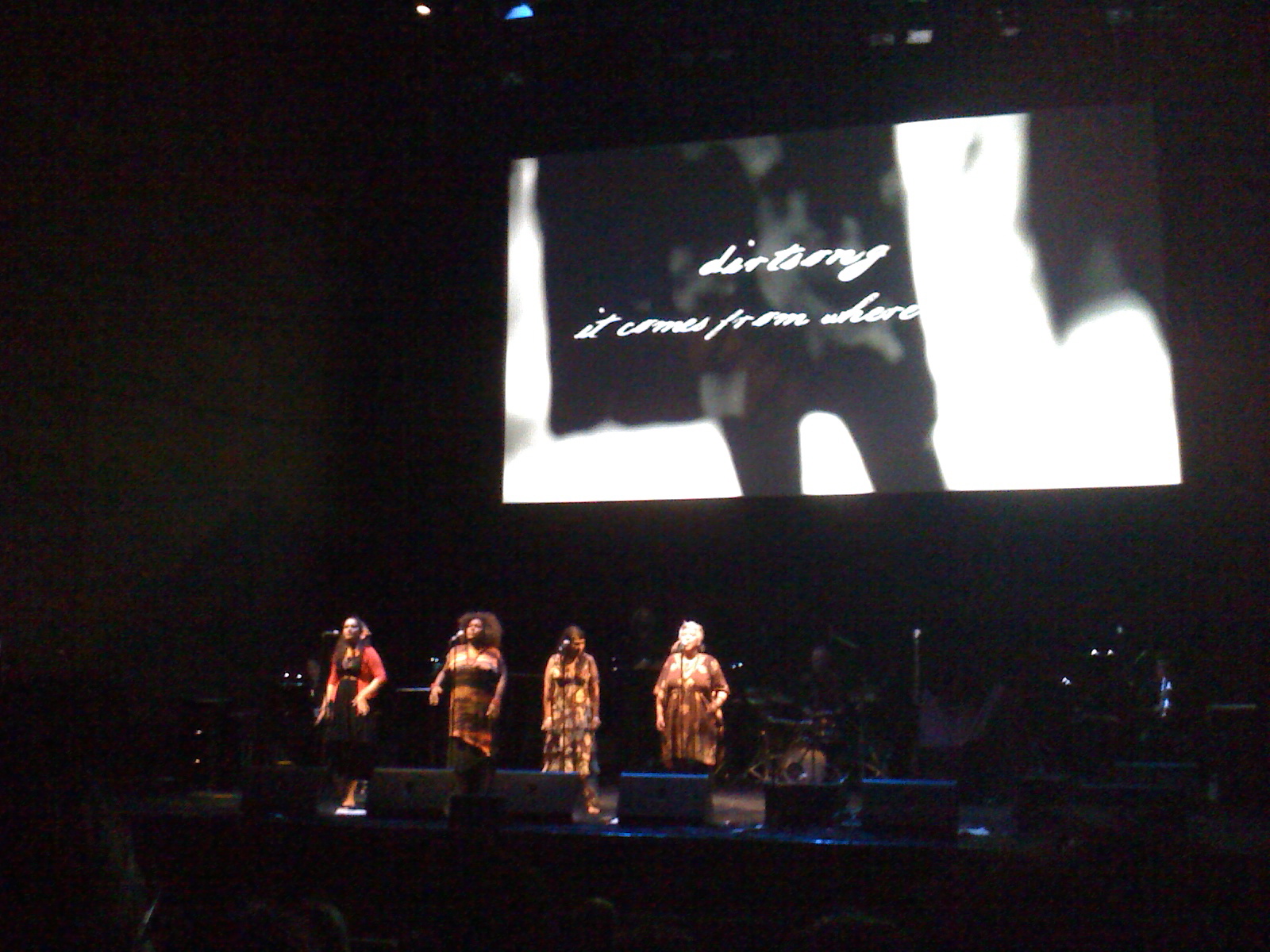
Within the first few seconds of dirtsong by the Black Arm Band, I felt at home. Funny how indigenous culture brings us to that humane place so quickly. I hear the root song of a region and I’m instantly reminded of Navajo and Hopi chanting and of the beginnings of my own voice in the Arizona desert.
The evening started with a ceremonial recognition of those “elders past and future, and the ones present here today.” Australia and New Zealand have developed this as a new practice at the beginning of all public meetings. It reminds current residents of those that stewarded the land before them and helps visitors orient to the values of the place. In the Boon Wurrung and Wurundjeri region where Melbourne sits today, there are really just two rules: don’t ruin the land and don’t harm the children.
These were the opening moments of the 5th World Summit on Arts and Culture hosted this year in Melbourne by the International Federation of Arts Council and Culture Agencies. IFACCA brings this meeting to a new cultural capital every other year. Two years ago we were in Johannesburg and many of the same cultural professionals were reacquainted here again.
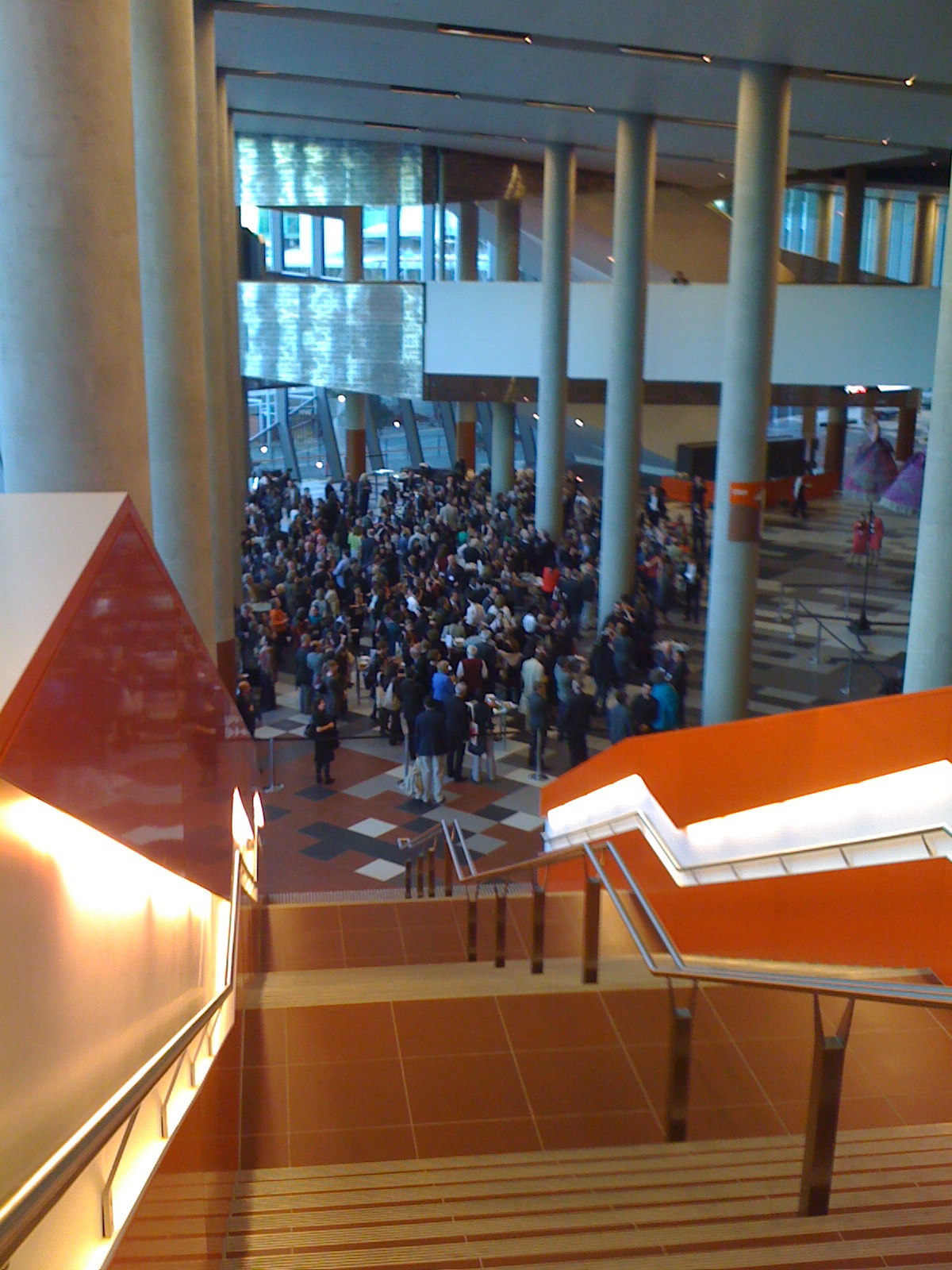
If you’re an arts person, you might recognize this group. It’s largely comprised of appointed cultural officials from around the world. Rocco Landesman was there to represent the U.S. They are minor dignitaries in their own worlds and equals in this one, which leads to a freedom of conversation that may strike some as both liberating and terrifying. Each conference picks up a majority of attendees from its home country, so the Australian cultural sector is in the house too.
The official program is a catalog of sessions on good cultural practices from around the world lodged in the terra firma of panel presentations. Exceedingly qualified people present their works to an informed audience that rewards them with knowing nods. The general agenda is ‘to share’ and this makes the conversations inside the rooms tend toward the earnest and dull. Outside the rooms, though, it’s a bonanza of worldly people obsessed with how art transforms society. Even polite exchange will get you some amazing stories.
Panayiotis Neufelt, for example, has a grand thought about monetizing those early moments of friendly favor that are so common among artists. It’s an idea similar to what Mayor Michael Bloomberg in New York City has proposed as a way to track the volunteer hours that contribute to the Big Apple’s vibrancy. So much of our work begins with an act of generosity, though it’s almost always unaccounted. Friends find the spark in early drafts. A mentor worries alongside you. Colleagues enthusiastically attend openings and connect others to new work. The inspiration here is to recognize the unnoticed good that goes into making art, although I now worry whenever I hear the word “monetize” in relation to cultural value.
I met Panayiotis in the lounge of the Pensione Hotel in the moments before the conference started. We were both in that airport haze when business cards are still packed and bags are hidden behind the concierge stand. We passed in the night through most of the meeting with a wave or a two-cheeked kiss and caught up again back in the hotel just in time to go the other direction. He tucked a pair of cuff links in my hand, an act which I took to be performative of his idea.
Another liminal connection happened with Maryam Rashidi who managed to give a beautifully-crafted academic paper to a small room of onlookers in a receding session on the last day. It was quizzical and fun to hear her subversive ideas in this buttoned-up format. Standing in a petite suit and holding the ubiquitous white paper in front of her, she suggested that the best cultural outcomes happen when artists are absolutely diligent about their ambiguities. Further, we should accept the performative sociality as the art itself and understand that unresolvable conflict is an interesting outcome. I left with my head swimming with implications and potentialities, and that sneaky feeling that comes when a sharp idea is delivered in stealth.
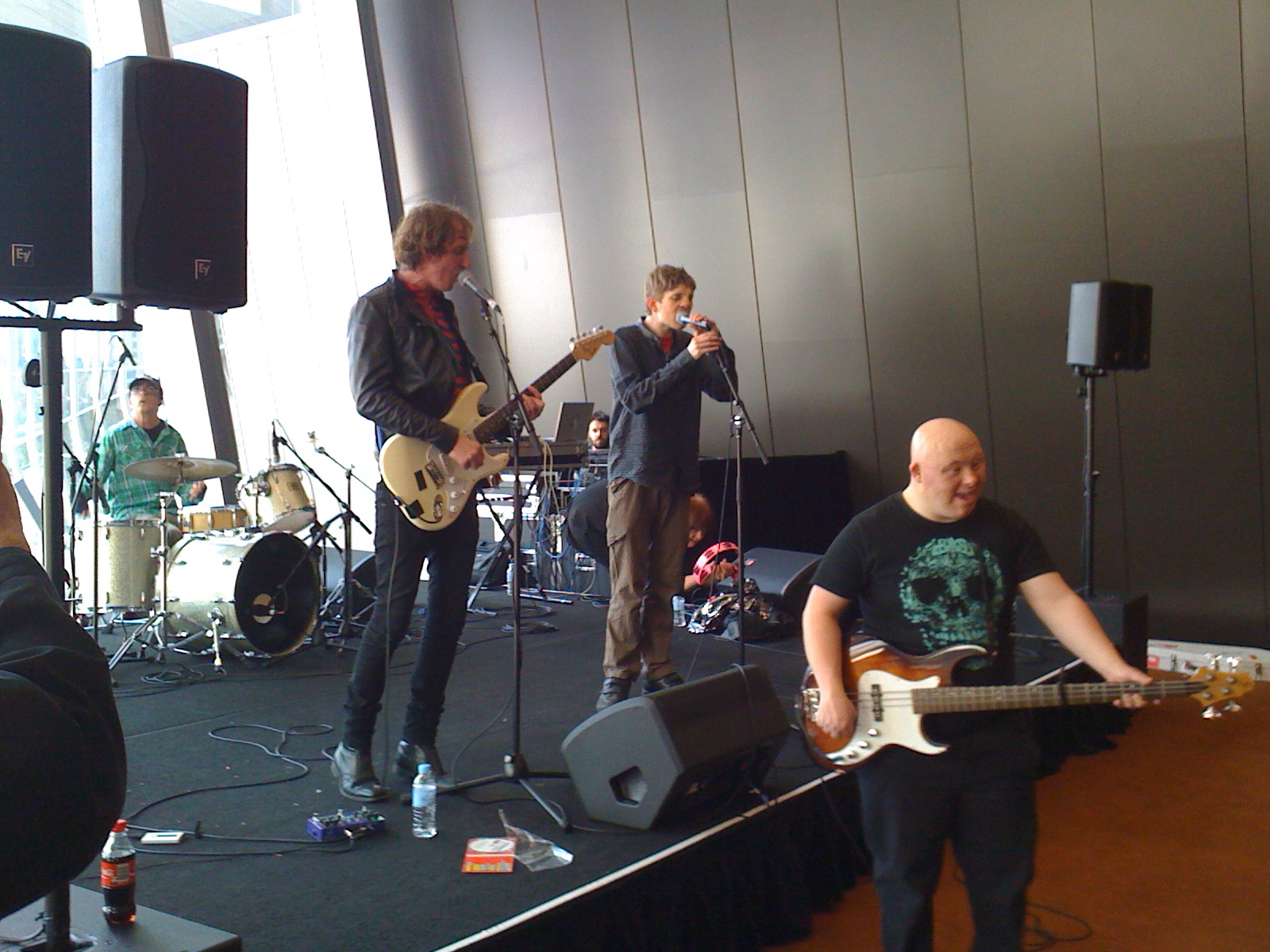
By contrast, the cultural program of the conference willfully shoved unexpected artists to the front of the line. We got amazing stuff over the lunch periods. George Kamikawa and Noriko Tadano blended Japanese folk song and American cowboy blues with a slide guitar and a traditional three-string Japanese banjo.
Then we were blasted back from the stage by Rudely Interrupted, a punk/alternative band who ripped a cover of the 80s love anthem, Melt With You, along with a bunch of tunes they wrote themselves.
As eye-openers go, the next night of theatre delivered too. The play was the unexpectedly controversial Ganesh Versus the Third Reich. Some called the behind-the-scenes exchange between intellectually-disabled actors too self-indulgent. If you’re counting, it’s twice that disabled people took the stage during the conference. I think ‘indulge’ is a limp word for the too-rare chance to see this particular point of view.
Watching the play didn’t feel obligatory at all. In fact, it had me guessing all the way through. Was one of the actors reciting lines or doing the kind of improv that only those with Down Syndrome can achieve? How much was the one straight actor directing ad hoc from his position on stage? Was the fight scene too rough for emotionally vulnerable people, myself included? The set changed through a series of graphic scenes on translucent curtains and a backlit shadow play. Who dreamt that up? I was engrossed for the duration, which was a lot to ask on a night when circumstances conspired to make me irritable and unforgiving.
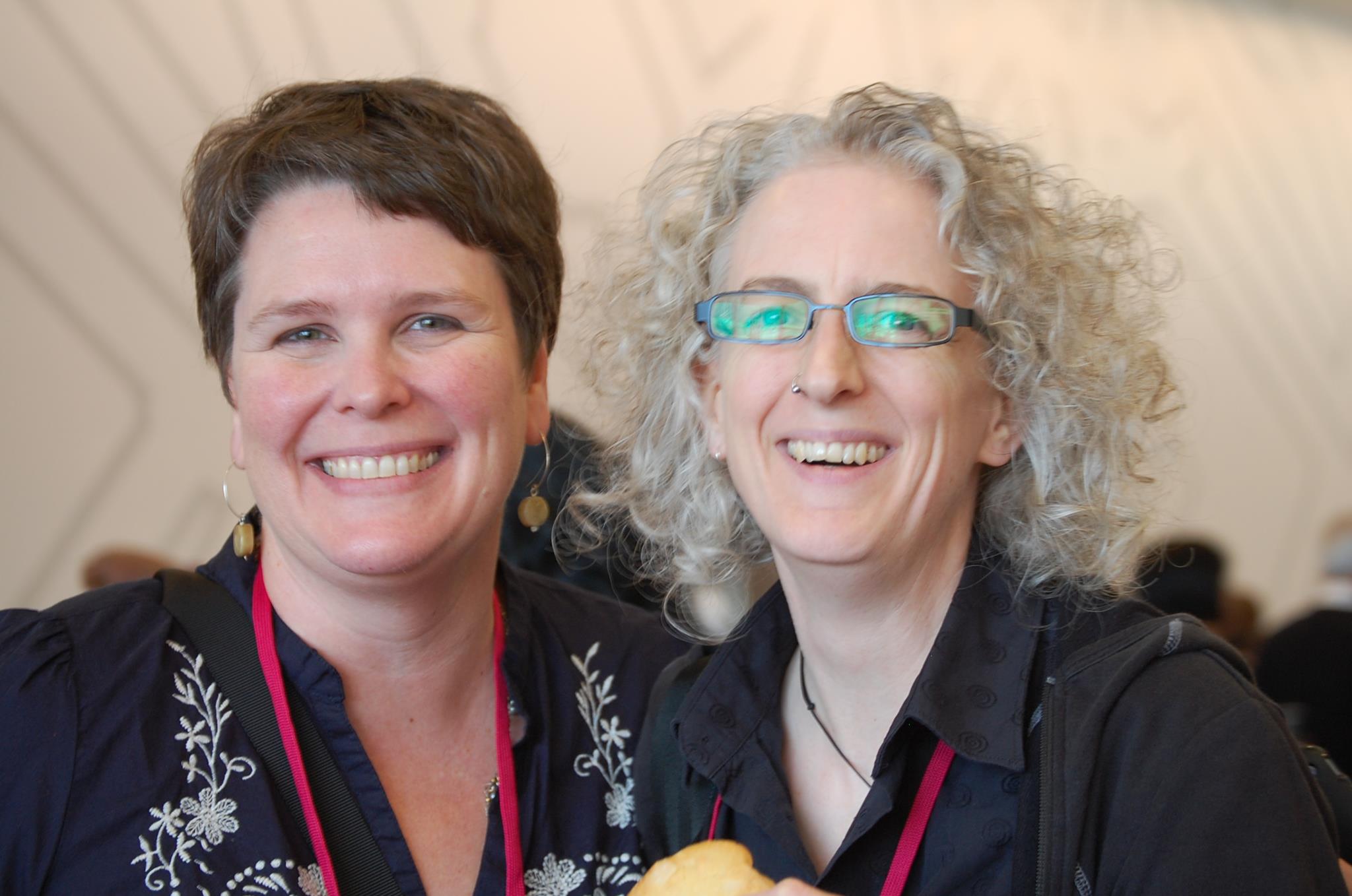
I was both a delegate and a plus-one at this year’s World Summit, which means I had an intimate view of the organizers and their work, as well as the professional exchanges you might expect at any conference. At times, this put my own desires at fierce competition. It was my intention to be a calm force for Louise (my partner who is on staff at IFACCA) but there’s no escaping the passions that these experiences excite. As we left the Ganesh performance, she was looking for the easiest way to a precious few hours of rest at the hotel. I was looking for a good intellectual argument, but got one that was rather less satisfying.
The message of the play and our personal drama converged in my journal a few days later. It’s risky to have expectations, but one must. I usually go to the theatre anticipating the magical; leaving without it is a disappointment. Following the confusions in Ganesh required curiosity and spacious acceptance on my part and I did end up with something I’d never seen before. I didn’t have such grace when our date night came to an unceremonious end. Luckily, the Chileans hosted a Latin dance party the following evening, a much better chance for us to get cultural together.
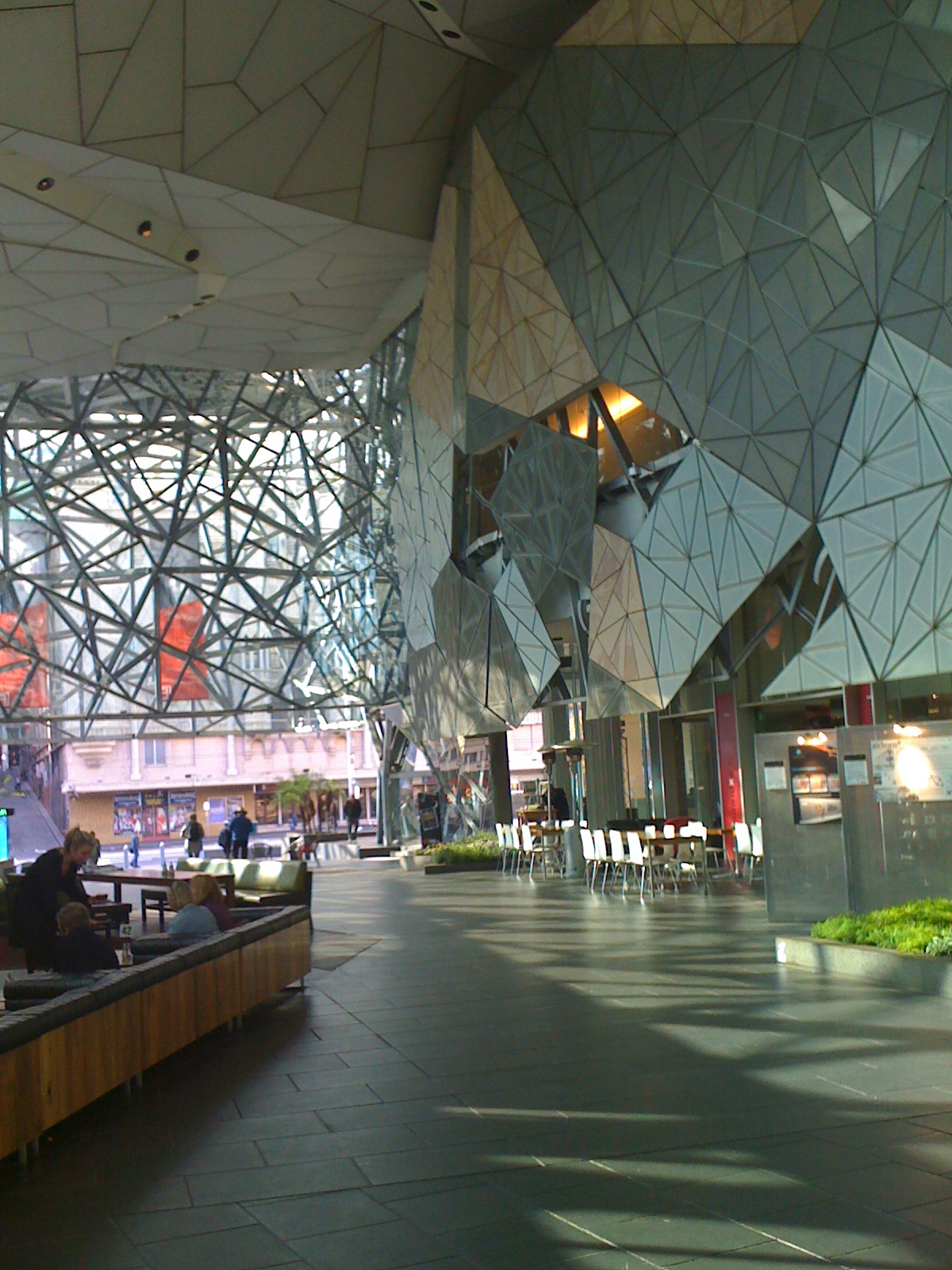
I didn’t attend the closing wrap-up session for the conference. Luckily, Jamie Bennett from the National Endowment for the Arts did and you can read his report here. I also didn’t make it to Melbourne’s much lauded Immigration Museum, which now guarantees me a return trip to the city. But on the final day, I did take a walk up to Federation Square, the center-city cultural hub designed for the wired global future (I picked up free wifi the second I got off the free tram). The nearby Arts Centre is undergoing renovation and I appreciated the Melbourne Festival’s curatorial engagement with that predicament.
Within a few hundred meters, the sharp architectural edges and twittering masses gave way to a grass and gravel path up the Yarra River. It’s a privilege to wander through a foreign city feeling comfortable and safe. It struck me how important that opening ceremony is in initiating the symbolic language of the place, especially to a visitor. I felt empowered to explore because I understood the two rules.
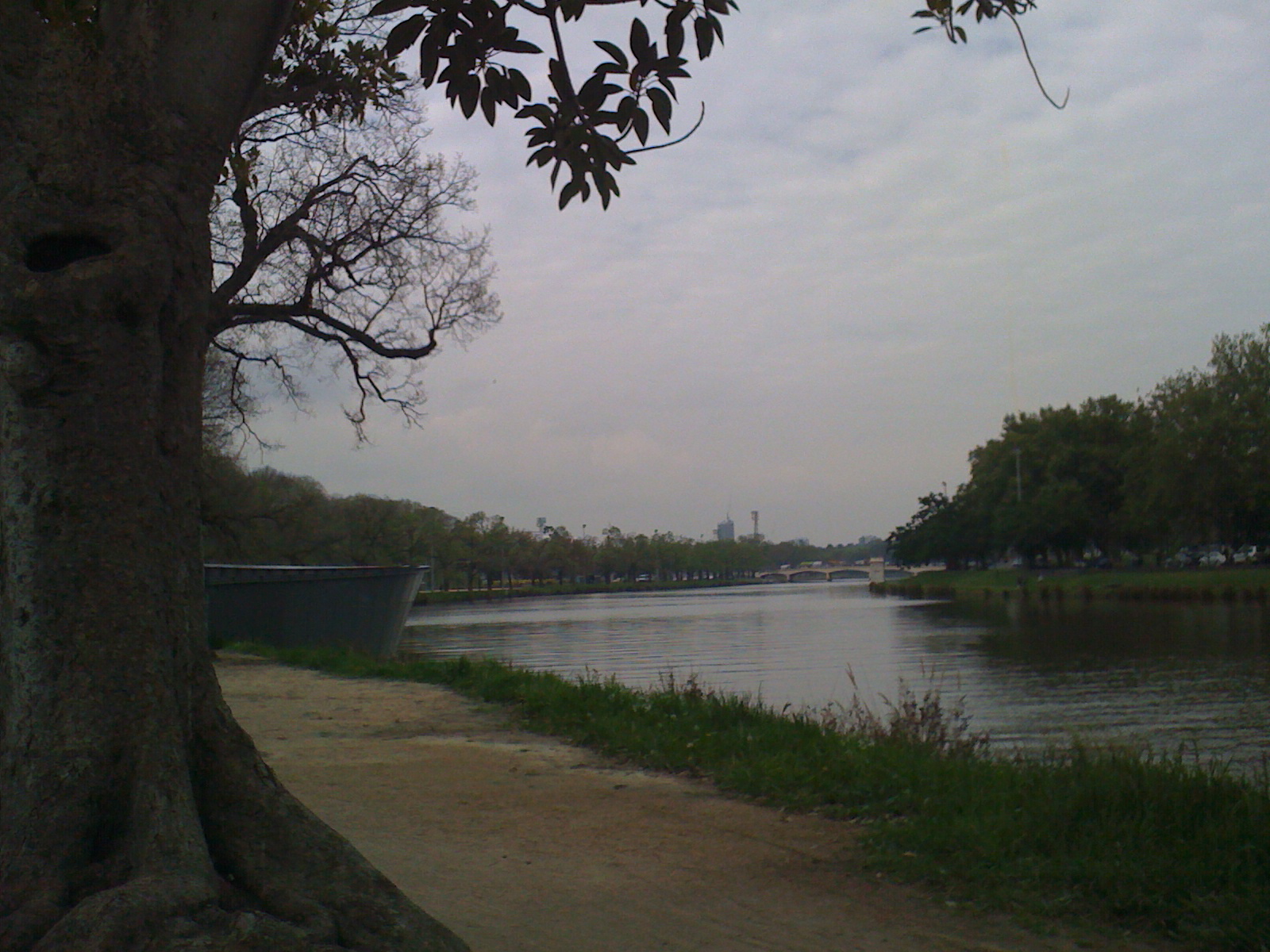
I followed the meandering river away from the cultural amenities along a bike path that connects to the Botanical Gardens. The older presence of the place revealed itself and I had a chance to reflect on how the city designers were also thoughtfully heeding those two early admonitions.
As I walked, I also sorted through the remaining images and questions from the conference and worked out a few physical kinks in order to get back on a plane. The 24-hour airport experience is a far cry from the rooted sense of place I got in Melbourne, though some artists are working those territories too.
- Are mayors speeches around the world all the same? I find it ironic that they can communicate so little so often, and it’s quite clear when they’re reading out loud something they haven’t written (or even considered).
- Is the blue dress a universal symbol of women’s resistance? I’ve now seen it at the Constitutional Court of South Africa, in a presentation about the arts making a safe place in Ciudad Juarez, and it countless paintings in between.
- How can we, as Lucina Jimenez-Lopez asks, “Change the verbs in the symbolic sphere” and “Create new narratives in the same social space”?
- All conferences need a twitter poet.
- As much as we gather around food and entertainment at these conferences, could we also gather around exercise?
- According to Julie’s Bicycle, caring for the environment will most certainly be our next important work in the arts.
Discover more from Anne L'Ecuyer
Subscribe to get the latest posts sent to your email.


One thought on “Report from the 5th World Summit on Arts and Culture”