Report from the 5th World Summit on Arts and Culture

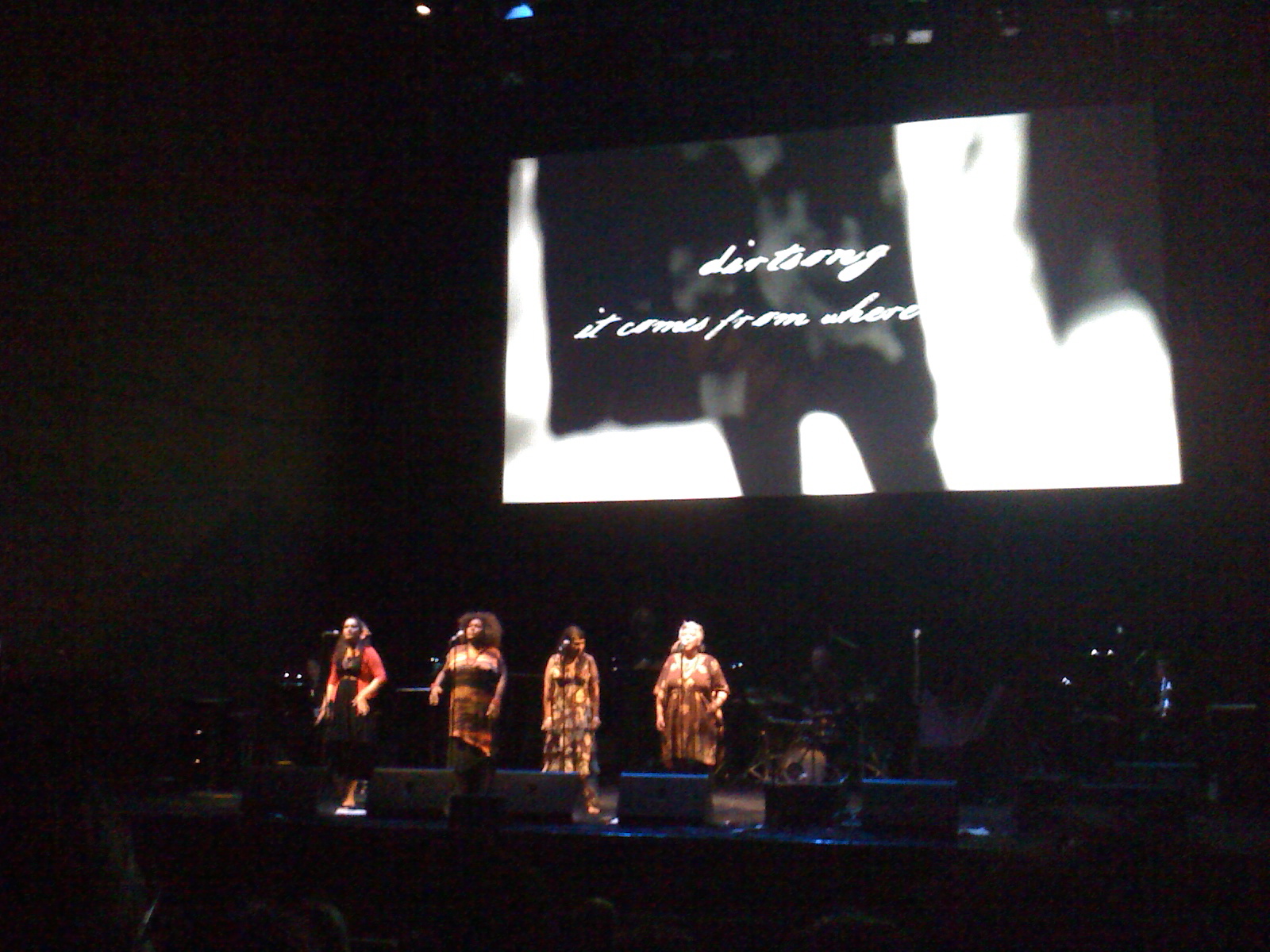
Black Arm Band performing dirtsong

Within the first few seconds of dirtsong by the Black Arm Band, I felt at home. Funny how indigenous culture brings us to that humane place so quickly. I hear the root song of a region and I’m instantly reminded of Navajo and Hopi chanting and of the beginnings of my own voice in the Arizona desert.

The evening started with a ceremonial recognition of those “elders past and future, and the ones present here today.” Australia and New Zealand have developed this as a new practice at the beginning of all public meetings. It reminds current residents of those that stewarded the land before them and helps visitors orient to the values of the place.  In the Boon Wurrung and Wurundjeri region where Melbourne sits today, there are really just two rules: don’t ruin the land and don’t harm the children.

These were the opening moments of the 5th World Summit on Arts and Culture hosted this year in Melbourne by the International Federation of Arts Council and Culture Agencies. IFACCA brings this meeting to a new cultural capital every other year.  Two years ago we were in Johannesburg and many of the same cultural professionals were reacquainted here again.
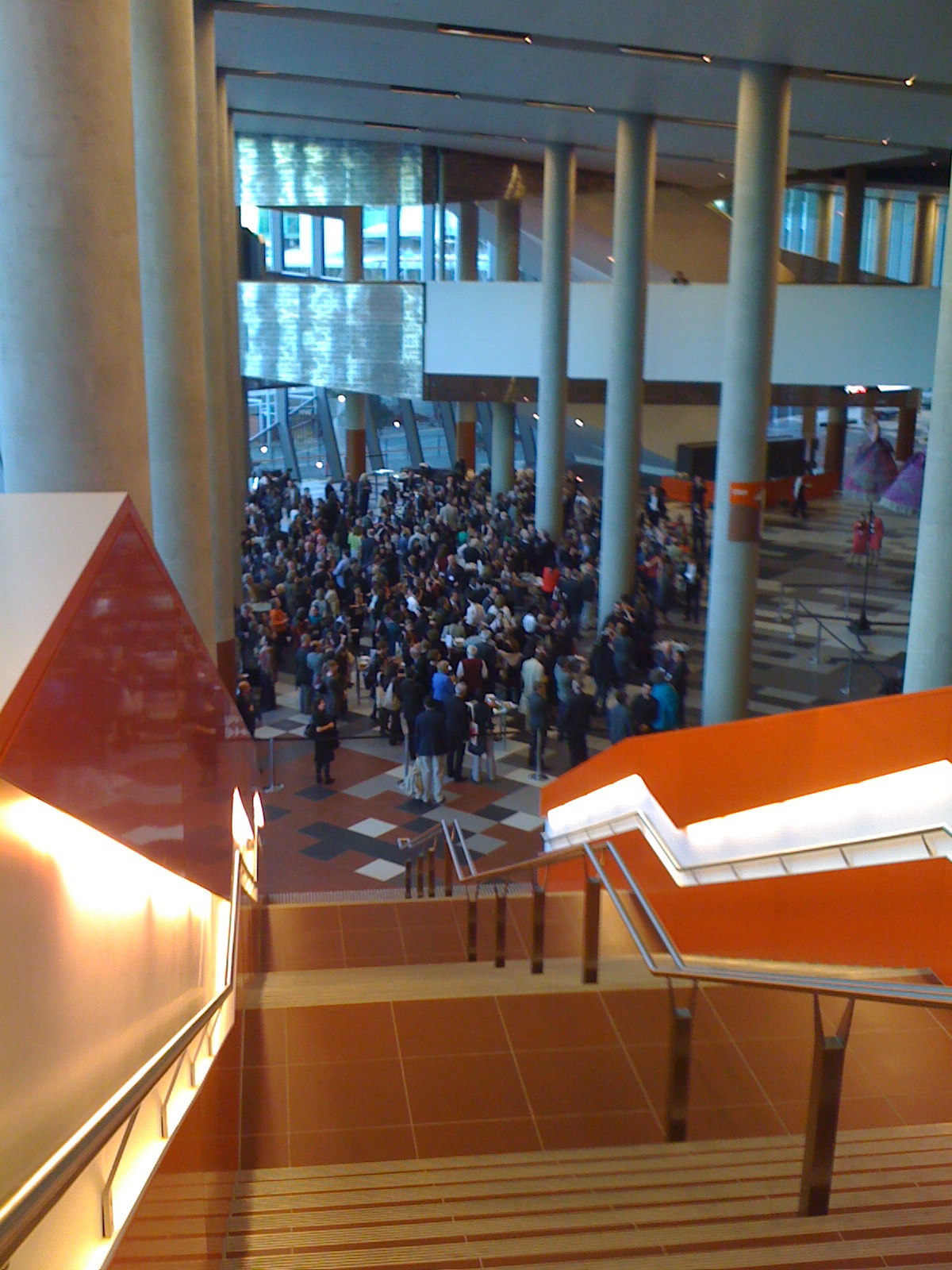
Conference centers still creep me out

If you’re an arts person, you might recognize this group. It’s largely comprised of appointed cultural officials from around the world.  Rocco Landesman was there to represent the U.S. They are minor dignitaries in their own worlds and equals in this one, which leads to a freedom of conversation that may strike some as both liberating and terrifying.  Each conference picks up a majority of attendees from its home country, so the Australian cultural sector is in the house too.

The official program is a catalog of sessions on good cultural practices from around the world lodged in the terra firma of panel presentations. Exceedingly qualified people present their works to an informed audience that rewards them with knowing nods. The general agenda is ‘to share’ and this makes the conversations inside the rooms tend toward the earnest and dull.  Outside the rooms, though, it’s a bonanza of worldly people obsessed with how art transforms society. Even polite exchange will get you some amazing stories.

Panayiotis Neufelt, for example, has a grand thought about monetizing those early moments of friendly favor that are so common among artists.  It’s an idea similar to what Mayor Michael Bloomberg in New York City has proposed as a way to track the volunteer hours that contribute to the Big Apple’s vibrancy.  So much of our work begins with an act of generosity, though it’s almost always unaccounted.  Friends find the spark in early drafts.  A mentor worries alongside you.  Colleagues enthusiastically attend openings and connect others to new work.  The inspiration here is to recognize the unnoticed good that goes into making art, although I now worry whenever I hear the word “monetize” in relation to cultural value.

I met Panayiotis in the lounge of the Pensione Hotel in the moments before the conference started. We were both in that airport haze when business cards are still packed and bags are hidden behind the concierge stand.  We passed in the night through most of the meeting with a wave or a two-cheeked kiss and caught up again back in the hotel just in time to go the other direction. He tucked a pair of cuff links in my hand, an act which I took to be performative of his idea.

Another liminal connection happened with Maryam Rashidi who managed to give a beautifully-crafted academic paper to a small room of onlookers in a receding session on the last day.  It was quizzical and fun to hear her subversive ideas in this buttoned-up format.  Standing in a petite suit and holding the ubiquitous white paper in front of her, she suggested that the best cultural outcomes happen when artists are absolutely diligent about their ambiguities. Further, we should accept the performative sociality as the art itself and understand that unresolvable conflict is an interesting outcome.  I left with my head swimming with implications and potentialities, and that sneaky feeling that comes when a sharp idea is delivered in stealth.
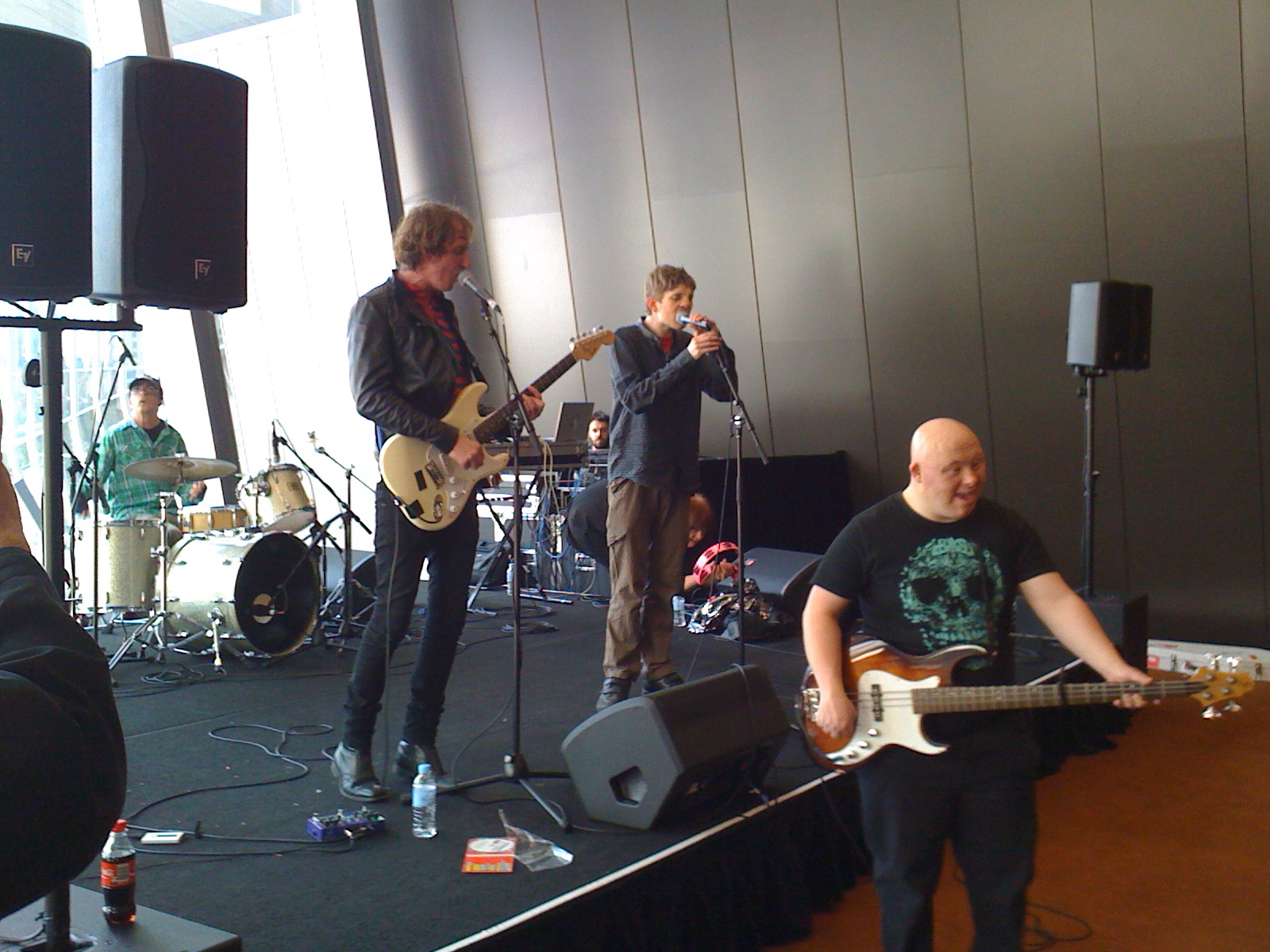
Rudely Interrupted
Rudely Interrupted

By contrast, the cultural program of the conference willfully shoved unexpected artists to the front of the line. We got amazing stuff over the lunch periods.  George Kamikawa and Noriko Tadano blended Japanese folk song and American cowboy blues with a slide guitar and a traditional three-string Japanese banjo.

Then we were blasted back from the stage by Rudely Interrupted, a punk/alternative band who ripped a cover of the 80s love anthem, Melt With You, along with a bunch of tunes they wrote themselves.

As eye-openers go, the next night of theatre delivered too.  The play was the unexpectedly controversial Ganesh Versus the Third Reich. Some called the behind-the-scenes exchange between intellectually-disabled actors too self-indulgent.  If you’re counting, it’s twice that disabled people took the stage during the conference. I think ‘indulge’ is a limp word for the too-rare chance to see this particular point of view.

Watching the play didn’t feel obligatory at all. In fact, it had me guessing all the way through. Was one of the actors reciting lines or doing the kind of improv that only those with Down Syndrome can achieve? How much was the one straight actor directing ad hoc from his position on stage?  Was the fight scene too rough for emotionally vulnerable people, myself included?  The set changed through a series of graphic scenes on translucent curtains and a backlit shadow play. Who dreamt that up?  I was engrossed for the duration, which was a lot to ask on a night when circumstances conspired to make me irritable and unforgiving.
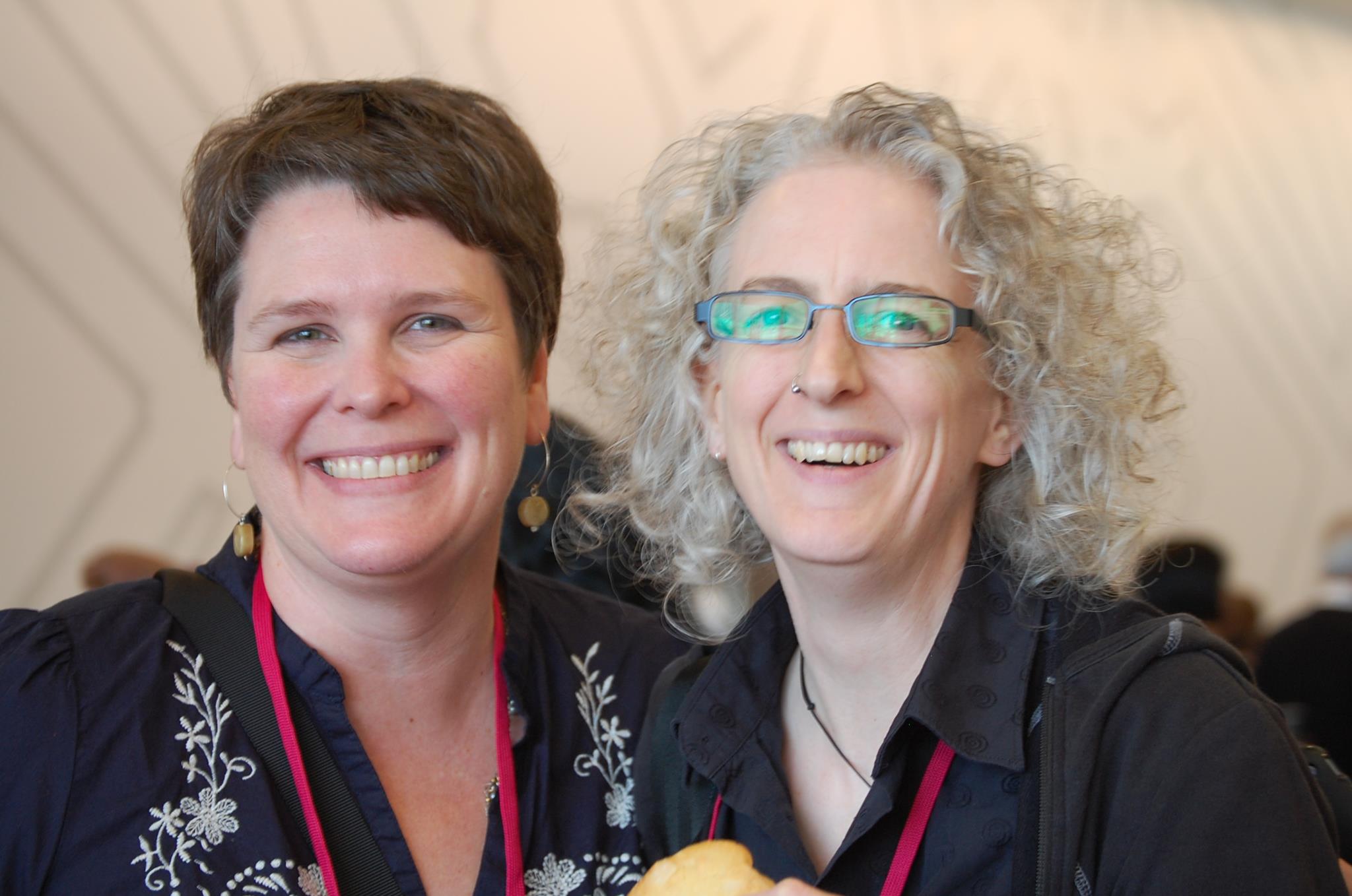
Anne and Louise
Inept on the Left

I was both a delegate and a plus-one at this year’s World Summit, which means I had an intimate view of the organizers and their work, as well as the professional exchanges you might expect at any conference.  At times, this put my own desires at fierce competition.  It was my intention to be a calm force for Louise (my partner who is on staff at IFACCA) but there’s no escaping the passions that these experiences excite. As we left the Ganesh performance, she was looking for the easiest way to a precious few hours of rest at the hotel.  I was looking for a good intellectual argument, but got one that was rather less satisfying.

The message of the play and our personal drama converged in my journal a few days later.  It’s risky to have expectations, but one must.  I usually go to the theatre anticipating the magical; leaving without it is a disappointment.  Following the confusions in Ganesh required curiosity and spacious acceptance on my part and I did end up with something I’d never seen before. I didn’t have such grace when our date night came to an unceremonious end. Luckily, the Chileans hosted a Latin dance party the following evening, a much better chance for us to get cultural together.
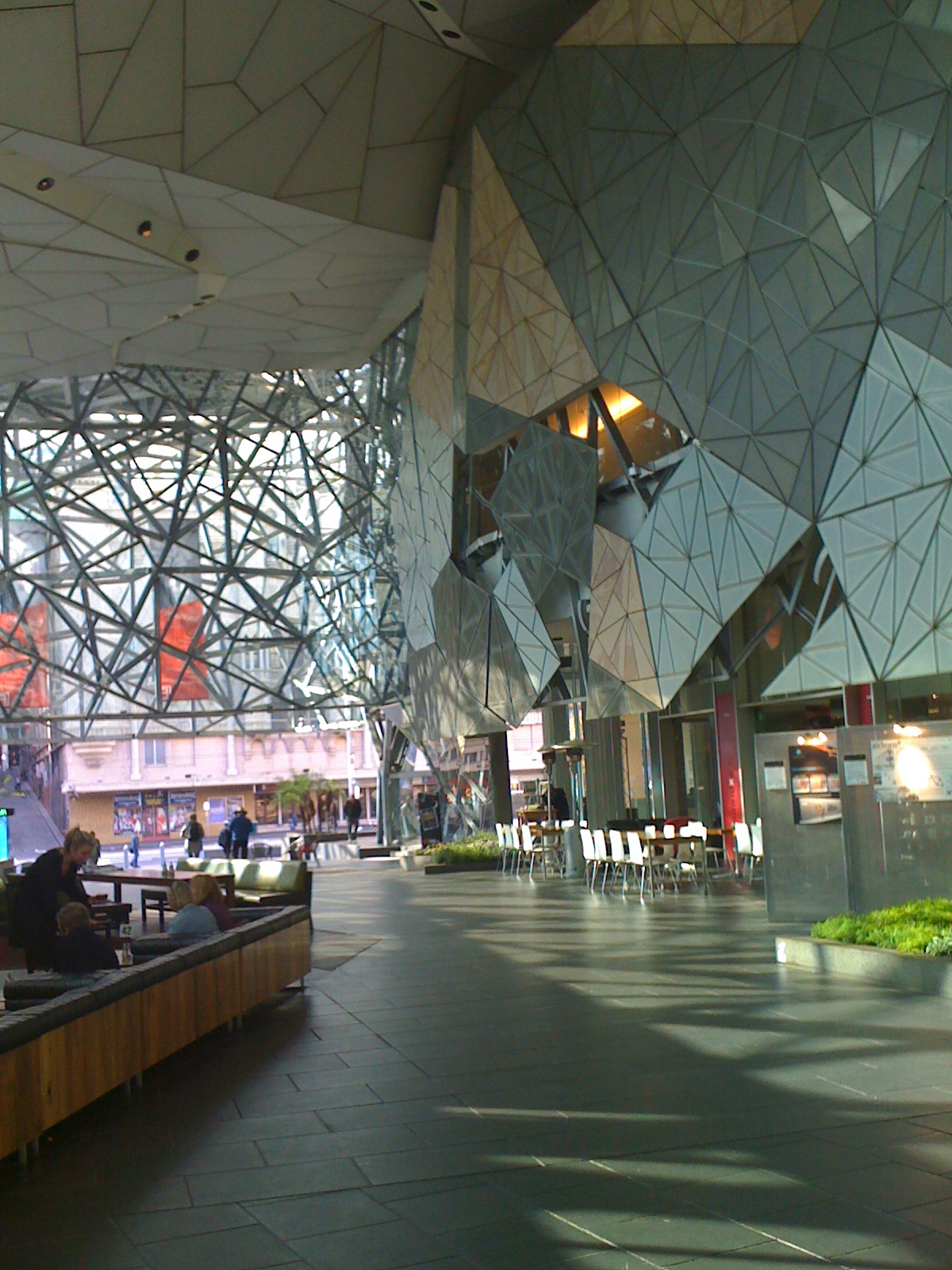
Federation Square in Melbourne

I didn’t attend the closing wrap-up session for the conference.  Luckily, Jamie Bennett from the National Endowment for the Arts did and you can read his report here.  I also didn’t make it to Melbourne’s much lauded Immigration Museum, which now guarantees me a return trip to the city.  But on the final day, I did take a walk up to Federation Square, the center-city cultural hub designed for the wired global future (I picked up free wifi the second I got off the free tram). The nearby Arts Centre is undergoing renovation and I appreciated the Melbourne Festival’s curatorial engagement with that predicament.

Within a few hundred meters, the sharp architectural edges and twittering masses gave way to a grass and gravel path up the Yarra River. It’s a privilege to wander through a foreign city feeling comfortable and safe.  It struck me how important that opening ceremony is in initiating the symbolic language of the place, especially to a visitor. I felt empowered to explore because I understood the two rules.
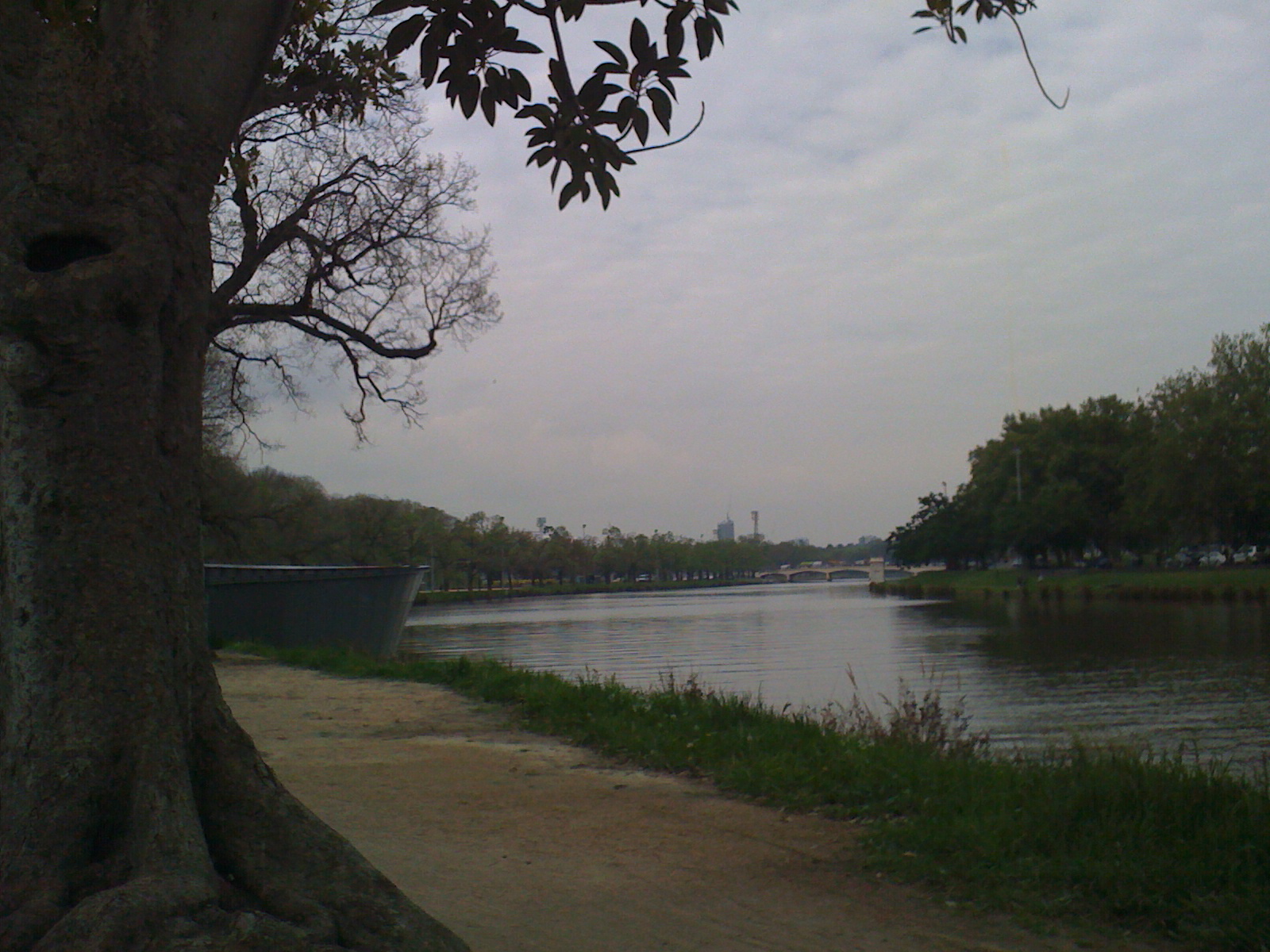
Path along the Yarra River

I followed the meandering river away from the cultural amenities along a bike path that connects to the Botanical Gardens. The older presence of the place revealed itself and I had a chance to reflect on how the city designers were also thoughtfully heeding those two early admonitions.

As I walked, I also sorted through the remaining images and questions from the conference and worked out a few physical kinks in order to get back on a plane. The 24-hour airport experience is a far cry from the rooted sense of place I got in Melbourne, though some artists are working those territories too.

  • Are mayors speeches around the world all the same? I find it ironic that they can communicate so little so often, and it’s quite clear when they’re reading out loud something they haven’t written (or even considered).
  • Is the blue dress a universal symbol of women’s resistance?  I’ve now seen it at the Constitutional Court of South Africa, in a presentation about the arts making a safe place in Ciudad Juarez, and it countless paintings in between.
  • How can we, as Lucina Jimenez-Lopez asks, “Change the verbs in the symbolic sphere” and “Create new narratives in the same social space”?
  • All conferences need a twitter poet.
  • As much as we gather around food and entertainment at these conferences, could we also gather around exercise?
  • According to Julie’s Bicycle, caring for the environment will most certainly be our next important work in the arts.
L’Écuyère à Bruxelles

Early morning in Brussels, Louise and I were sipping coffee and looking at a map while our friend Ilona got her kids off to summer classes. The girls were searching around for their riding gear and Jack was banging a spoon on the table. It was a whirlwind of activity just as we were waking up.
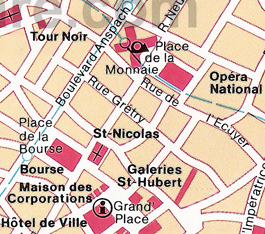
Ilona handed Louise a bus ticket and pointed to the map. We would take a bus on la rue du Trône into the city and get off at the stock exchange, called La Bourse. We could then wander around and later meet Ilona at her office in the afternoon. I knew that I wanted to go to the Magritte museum and Louise knew she wanted a Belgian waffle smothered in chocolate. Beyond that, our aim was to explore.

I was in love with the map. Palais des Congrès, Gare Centrale, and Notre Dame aux Riches Claires. Place names, streets, and cultural markers, all in French.
With a shout, I jabbed my finger at a spot on the map that read la rue de L’Ecuyer, a small street about three blocks long near the Place de la Monnaie and the Opéra National. I was elated to have such a personal place to start. “Well,” Louise planted her hand on the table, “I guess we’ll be going there.” The next street we found was Avenue Louise, and we were out the door.
I’ve had the name L’Ecuyer for more than forty years, and a day rarely goes by when I don’t spell it, pronounce it, or smile politely when someone speaks to me en français. If I’m feeling courageous and they seem patient, I might try to carry on a conversation. It was easy to do that in Brussels. It’s the capital city of the European Union and they speak three languages—Flemish, French and English—sometimes all at once.
Our family doesn’t come from this region, but that didn’t keep me from trying to find my place in the French culture around us. We stepped out of Ilona’s beaux arts row house onto the narrow cobblestone street. I read the signs out loud, practicing against Louise’s pronunciation, as we passed le pâtisserie and la laverie. There was a salon called Chez Julie and a boulangerie named Paul. By the end of the day, I noticed myself thinking in French and trying to form sentences to describe the quaint streets, palatial architecture, and sense of history around us.
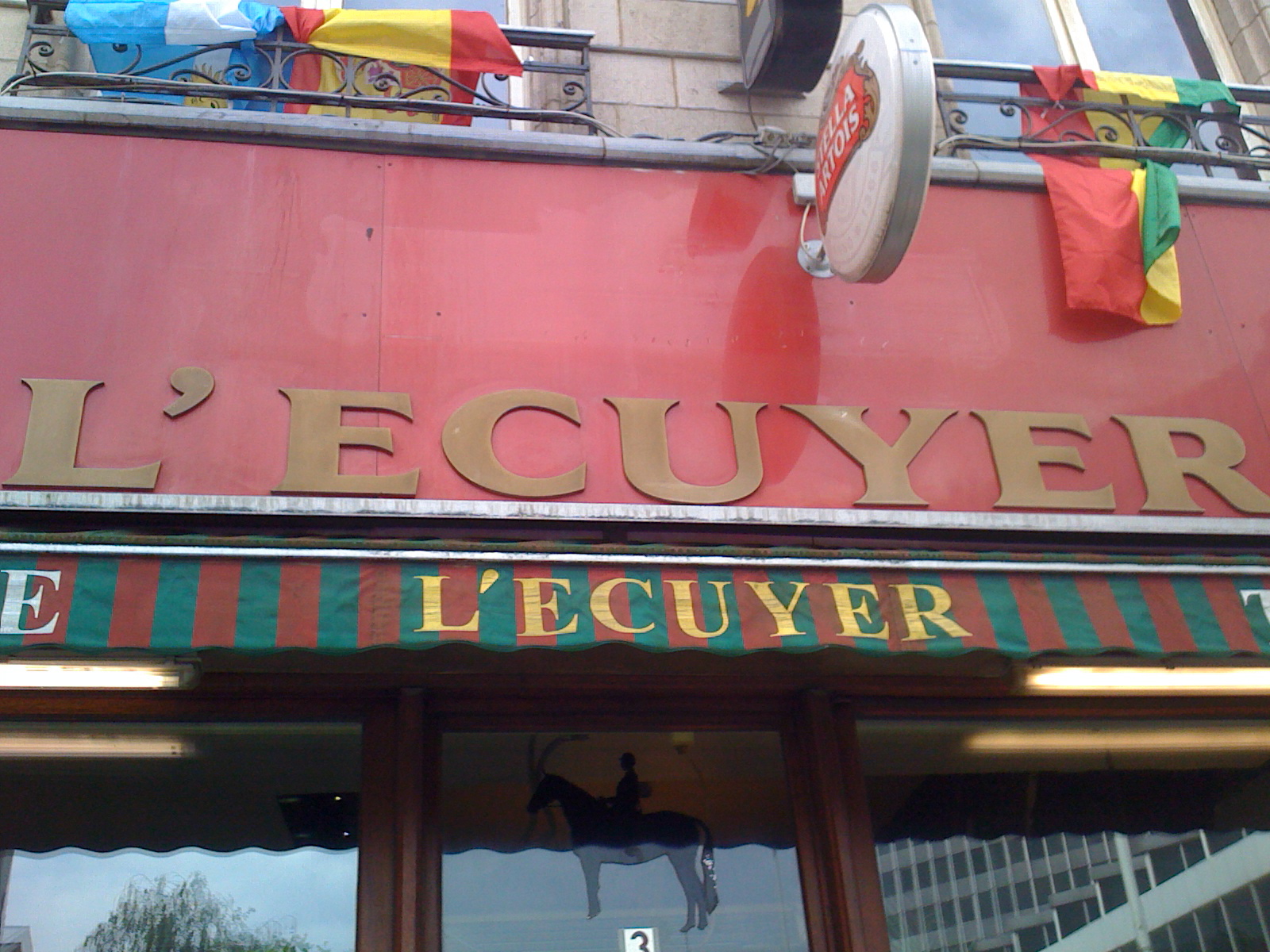
After a bus ride that wound through the center of the medieval city, we walked a few blocks and turned the corner onto my street. It was impossible to miss the first sign, an awning with our surname emblazoned across the front. We took selfies outside and summoned up the courage to go inside the pub to speak to the staff. Neither of us really wanted a beer, but I did want something with my name on it to take home.

The broken French I used to explain my request to the barkeep was appalling. To begin, I should have said, Je m’appelle Anne. What I did say, Mon nom est Anne, is less like an introduction and more like a statement of fact. Then I asked if she had some ice cream (la glace) or a map (la carte). What I wanted was a glass (une verre) or a menu (un menu) that I could purchase or take away. Others began to stare and finally Louise helped make sense of what I meant. They laughed along with us, but alas, nothing to take home.

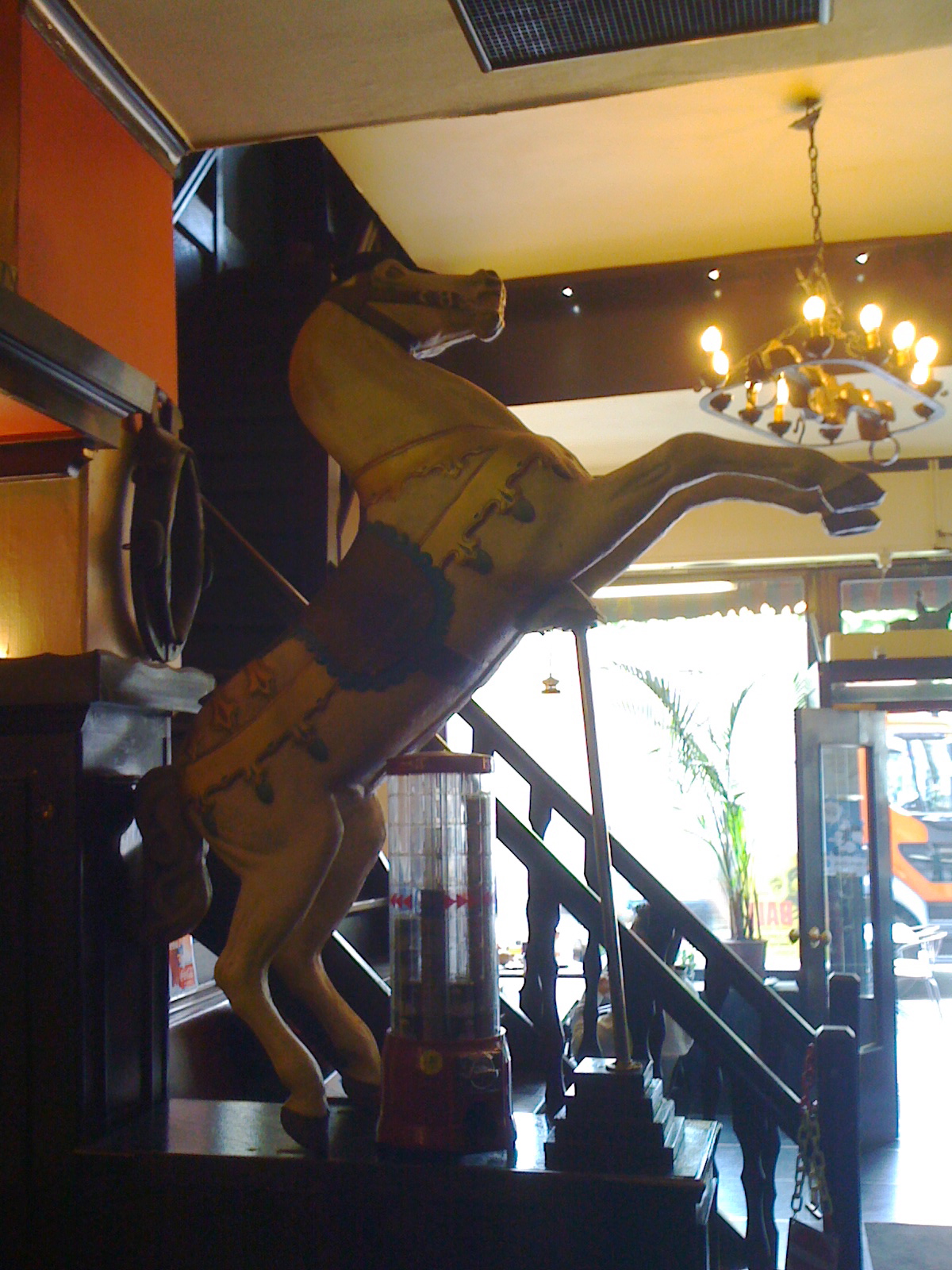
I did get a dim-lit picture of the carousel horse in the center of the pub, which seems prophetic now. I was only beginning to understand how our name related to le cheval and le chevalier, the horse and the knight. That story would take new turns throughout the summer as I learned more about l’ecuyer and l’ecuyère in history and art.
In the French middle ages, the title l’ecuyer was given to young men whose job it was to assist a knight, and who might become knights themselves someday. To me the title implies trust and youthful promise. The job was to look after the knight’s horse, weapons and armor, to stand in for him at times, and to rescue him from battle if necessary. Our name later came to mean ‘esquire’ or what the British call an ‘equerry’ which is a man of some status who serves as an aid or representative to a person of great rank. Many people now think of ‘esquire’ as a synonym for ‘lawyer.’
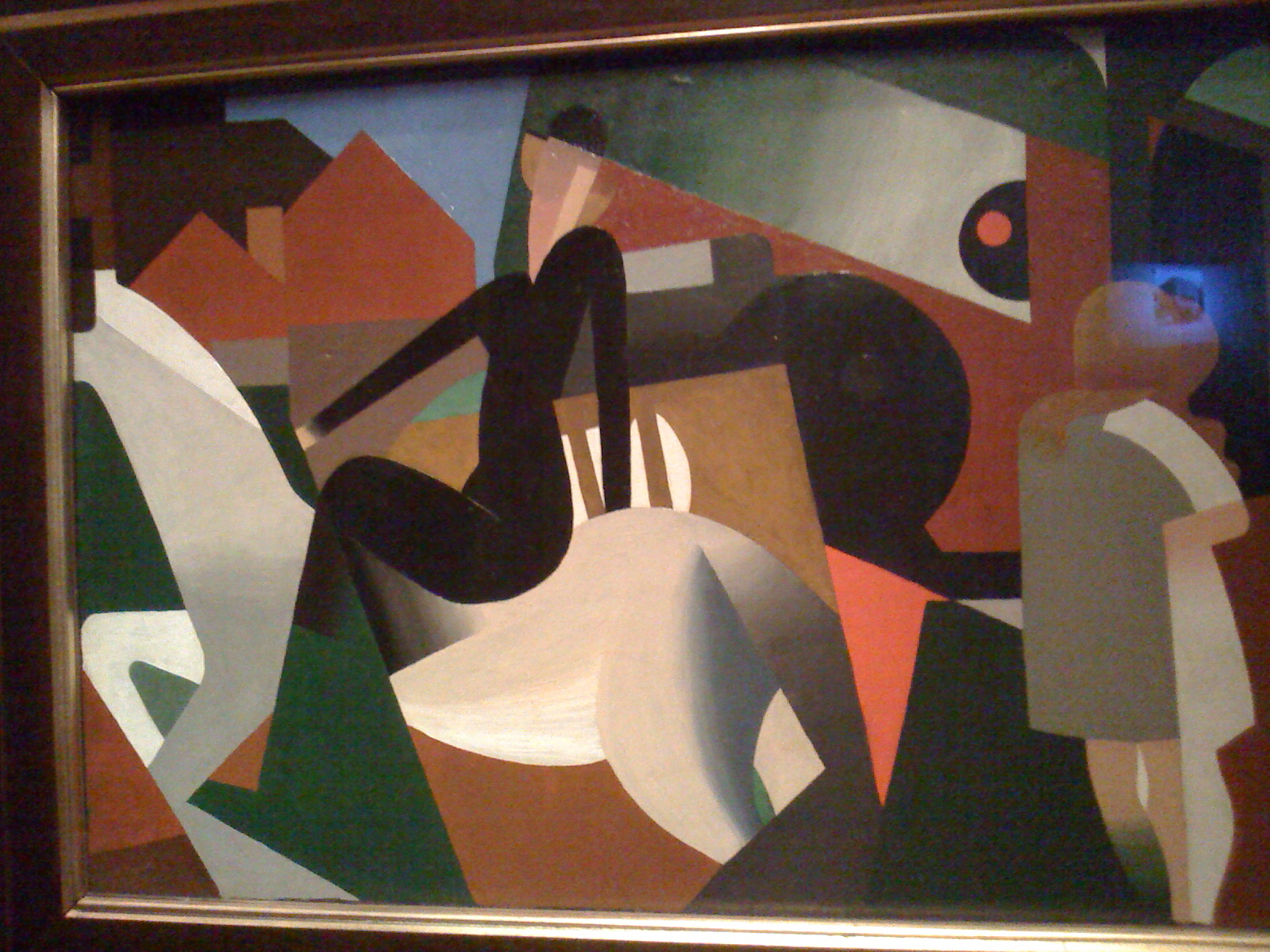
After Louise and I left the pub, we found ourselves three levels up in a dark gallery of the Musée Magritte. “Over here,” she said. I turned to my left and made my way over to her. She pointed to the label next to a large painting by the famous surrealist. I had to get very close to it to see that it was titled L’ecuyère.

I looked to either side and thought for a moment about the museum’s rule against taking pictures. I decided that this clue about my history was more valuable than their propriety in this instance so I held my iphone discreetly in front of me. Remarkably, there was no attendant in the room at the moment. I snapped a single shot of the painting and another of the label that bears its title, then I shoved my phone in my pocket and quickly moved to another gallery.
There is no female equivalent of l’ecuyer in the Middle Ages, but after 1926 the female figure of l’ecuyère appears in popular French culture and the artwork of other masters of the era like Picasso, Matisse, Seurat, and Chagall. At times she is depicted as a noble woman riding a white horse. She also appears as a flamboyant acrobat who performs tricks with show horses in the circus. Seeing the female figure in the painting shifted my perspective slightly. Now I seemed to be seeking my own history (not my father’s) and everywhere I looked horses, French culture, and our name began to appear.
We had just come from a visit with Louise’s dad and his wife Eunice in Spain where they live near a small village north of Málaga. Their house is perched on the side of a mountain and they have a stable with three horses there. Shortly after we arrived it was time to bring them in from the paddocks.
Eunice was in her dirtiest shorts and work boots. She handed a lead rope to Louise, another one to me, and said, “Anne, you go with Graham.” She meant for me help Graham lead the third horse back up the hill. I was afraid at first, but I remembered that horses can easily sense fear. I focused and calmed my breath as we walked out to where they stood in the afternoon sunlight.
Graham and I had Enrique, the most dominant horse, and somehow we ended up at the back of the line. As we walked, Enrique pushed toward his rightful spot and nearly shoved me off the side of the hill. Eunice looked back and understood our dilemma. Enrique was not about to stay in third place. She called me forward to take the lead for her horse, and moved Enrique up to the front where he belonged.

Once the horses were in, Eun began mixing their food in huge rubber buckets. I tried to memorize the recipe as I watched. Then we hauled the buckets out to them, filled up their water, gave each some hay, and mucked out their stalls with a shovel and a wheelbarrow. I was eager to learn and followed her around like an apprentice for the next few days. I wondered was I subconsciously inhabiting some innate role? Was I yearning to be a second set of hands?
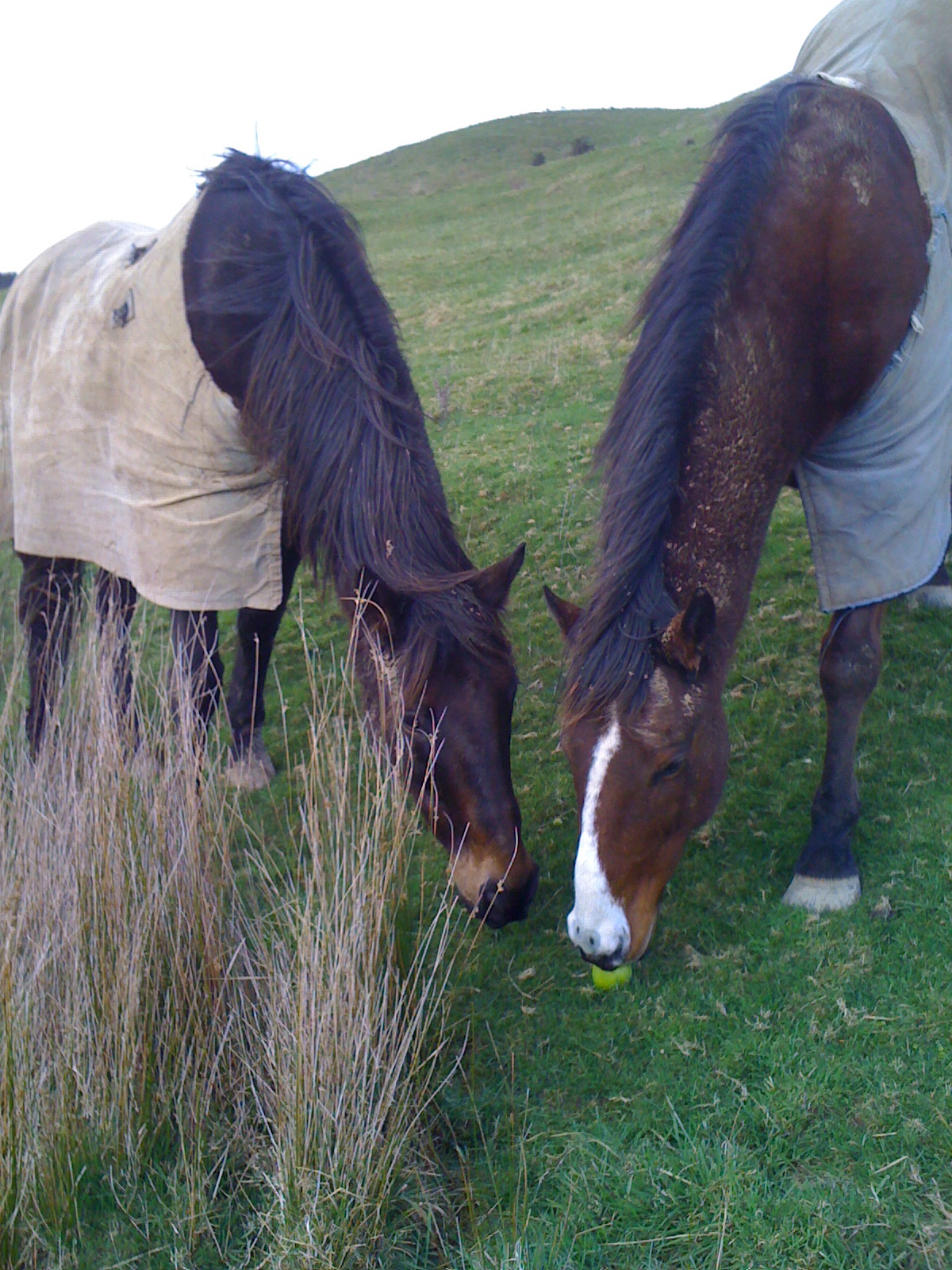
Later at New Pacific Studio in New Zealand, I would befriend two horses at the next farm over who greeted me each time I went out for a hike. I’d caught onto the horse theme by then so I was curious to spend time with them. I took apples with me once and got a few beautiful pictures out in a pasture. They were calm and shy, but they followed me as far as the next fence. I imagined what it would be like if my job was to care for these creatures. How would a humble l’ecuyer live today?
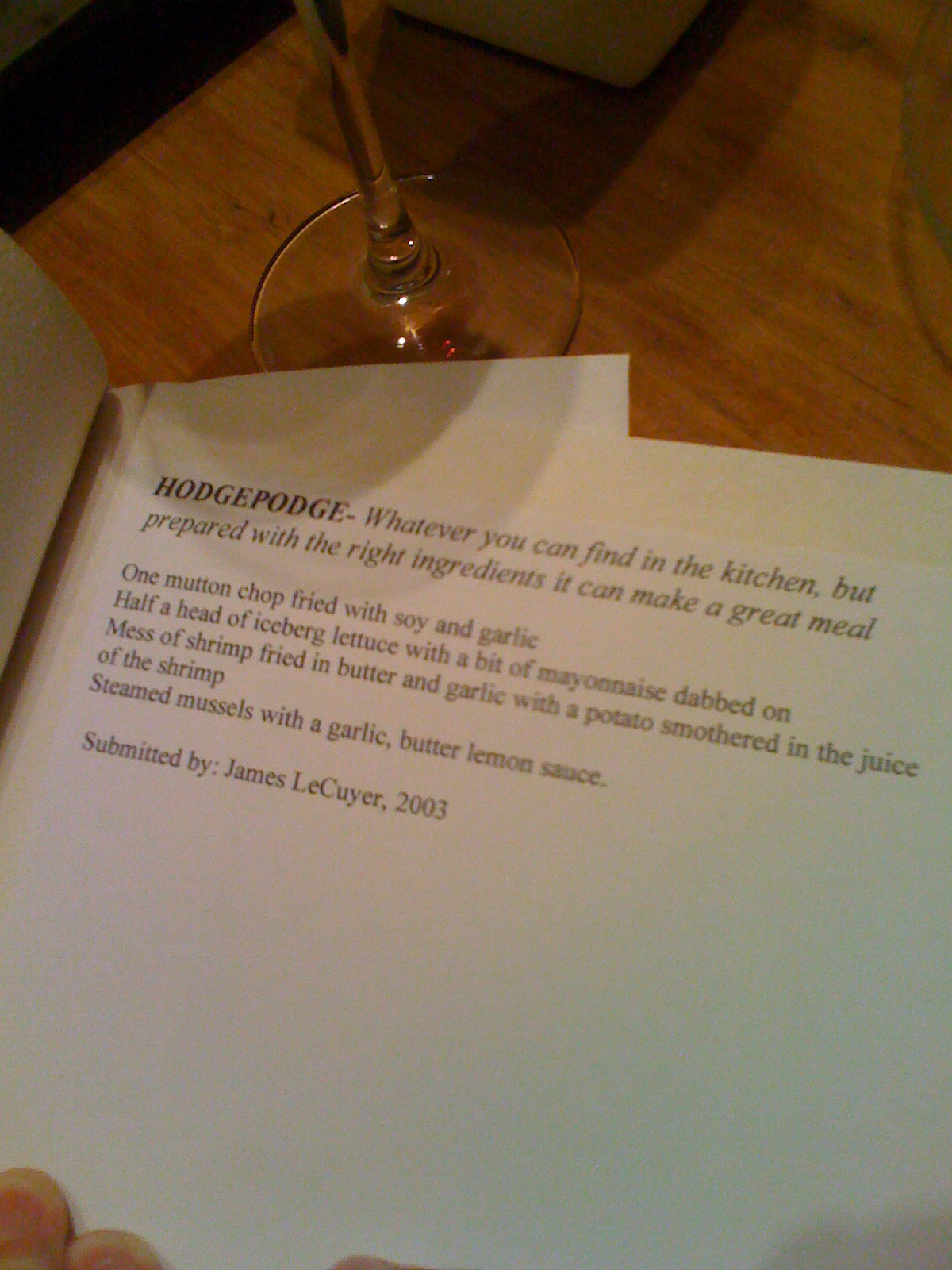
One night back at the retreat, my friend Kathy and I were making dinner and looking through a homemade cookbook in which other writers had left their favorite recipes. Kathy just finished telling me how she loved the challenge of making a fabulous dinner from whatever was left in the fridge. Right then, I turned the page in the cookbook to one that said, “Hodge-podge, whatever you can find in the kitchen but prepared with the right ingredients can make a great meal.” The page described shrimp in butter sauce over a potato and a few other impromptu combinations. I gasped when I saw that the entry was signed James LeCuyer, 2003.

“Do you think you’re related?” asked Kathy.
My answer was a long one and Kathy let me ramble for a while. I recounted the stories we had gathered over the past few months along with family memories and my own feelings about our heritage. It wasn’t the first time I’d run into someone who shared the same last name but it felt more personal just then. I studied the recipe card, as if I could divine some connection between us from the clues in front of me. He was a writer and could make a good meal from not much at all. How many times has he spelled his name? Does he know he comes from a long line of able and loyal attendants?

Write Down Your Dream

By the wrong measures, my brother Paul was a spectacular failure. On the day he died, he was poor and prematurely losing his teeth. He had a hefty paunch, though he rode a bicycle for daily transportation. His personality was so raw at times that some people couldn’t stand to be around him. Despite this, Paul thought of himself as a motivational speaker, much like the Greg Kinnear character in Little Miss Sunshine only without the endearing wife and family.

Today, he would have a diagnosis on the autism spectrum. He spoke loudly, sometimes shouting for emphasis. He was opinionated and got angry if you didn’t agree. He imposed his will and strange pastimes on others. At our last Thanksgiving together, he backed our entire family into a corner for a strained serenade of a Miguel Bosé song in Spanish. We didn’t know the language or the music and participated for fear of the consequences. At times his discomfiture was epic.

To make money, he was a bellman during the days and worked sleepover jobs in home healthcare. He had a room in a friend’s house. It was small and he was rarely there. When we cleaned it out, the room was a jamble of memorabilia, volumes of paper, and sheets that hadn’t been washed since college. His bachelorhood had gone to seed. 

Paul rode his bike at least twenty miles a day. He made a loop between the hotel and a client’s home, changing from his uniform into sweats and back again. He carried a satchel everywhere and had a peculiar gait that caused his six-foot-four frame to bob up and down. 

You would have recognized him as a teenager. He was tall and lanky, an accomplished runner and cyclist who rarely managed to slow down or relax. He rode El Tour de Tucson, the competitive bike race, sixteen times. He attended every University of Arizona Duel in the Desert football game for twenty-six years. 

He struggled to mature as he grew older. Emotionally, he was a volatile mix of unrequited love and nervous tension.

Paul was college-educated, and when he wasn’t riding his bike or working day and night jobs, he was writing obsessively, organizing weekly time management workshops, and volunteering in his community. He was appreciated among his friends, co-workers, and the people he helped. A month before he died, he took a Thanksgiving basket to a family in need. When his bank account was reconciled, we discovered he had less than $600 and had just spent $150 on the gift.

Paul’s motivational message was divine in its simplicity. What if we all agreed to treat each other better, to keep promises, and to be generous? He spent all of his enormous mental and physical energy trying to convince people that his plan would work. Among his closest friends, he had believers whose lives he managed to touch and change. Paul was a Big Brother to a young man who turned out well. Most of his friendships were lifelong. He kept even modest acquaintances afloat with an impenetrable hope for humanity.

But as a communicator he was pretty awful and his lack of social grace kept him from being accepted among equally high-minded peers. He acquired a graduate degree in counseling through sheer perseverance. After ten years, I suspect the school awarded it just to get rid of him. If anything, Paul was determined.

The reams of paper in his room and the files stored on ancient floppy disks were an obsessive chronicle of Paul’s philosophy. He wrote manuals on time management, printed up postcards that described his principles, and devised sample contracts that were meant to help men and women negotiate their relationships better. None of them were very good writing, technically, and the schemes he created were too formal for most human relationships. To some, Paul’s work looked like an academic and social train wreck. And, it was a lifeline to others. 

Every year Paul made a card for Martin Luther King Day. It was a tradition he created and upheld since the holiday began tumultuously in Arizona in 1983. The card invited you to “Write Down Your Dream,” and Paul provided very simple instructions.

“Write down your dream,” he said. “Something for a primary purpose beyond yourself that you would like to do, contribute towards, or see happen in your lifetime or beyond.” Look for something that truly excites you. Commit to it daily, if possible, but at the very least once a year. Find some way to measure yourself and stick to it. Do it with unconditional love. It’s easy, he cajoled. The first step is just to write it down. Then, he made space on the card to fill it in and provided an address to mail it back.

In the late 80s, Paul went to MLK marches in Tucson and Phoenix. He handed the cards out and invited people to join in the tradition. Though I never accompanied him, I can see him in my mind’s eye. A tall, rambling, white guy circling among the crowd trying to look like he belonged.

Ideologically, he was among friends. Paul’s thinking was deeply influenced by the American civil rights movement. His favorite song was “Sunday Bloody Sunday.” He was infuriated when then-Governor Mecham rescinded the MLK holiday, and later angry with our father for defending him in court. 

Paul spoke Spanish fluently and was embraced by friends in Arizona and Mexico. He felt far more at home in border culture where his unusual behavior was strange for a different reason. I gather he came across as charming to some. He was forever singing in Spanish and trying to engage through Mexican popular culture. He was in love only once, I think, with a beautiful Latina who was delicate and gracious in her longtime friendship with him.

Paul wanted nothing more than to be the Tony Robbins of his dusty Tucson outpost with an aim to pass on his simple assertion that we should care for each other. He handed out the greeting cards with persistence. Over the years he did meet like-minded people who filled in their dreams and sent them back. In an era before Facebook, Paul was the keeper of those hopeful messages. He yearned for and would have prospered in the online environment we have today. 

Paul was killed by a drunk driver while riding his bike home late one night in December 2006. The driver was a young woman who let her fate go careening far beyond her own control, this time fatally into my brother. Her lack of remorse made headlines at the time. I remember thinking that Paul would have immediately begun the hard work of forgiving her. She was one of his flock, in a way, someone he would have wanted to reach. Since his death, I understand more about Paul’s motivations.

His failures have also been instructive. Paul had a great message but a painfully awkward delivery. His strong desire to help others would have been better turned inward at times. Paul was a fiercely protective older brother. Yet in my last email, I pleaded with him to consider why he treated our parents with such disrespect.

Until he died, my deepest fears were rooted in his failures. We are more alike than was comfortable to admit. It was difficult to live with the spectre that his life could be mine. His behavior was a boundary fence for my own sanity. I was ok as long as I wasn’t acting like him. 

When I take full account of his life, it is much easier to accept those characteristics we share. Personally, Paul’s most lasting impact on me has been his approach to sport. He chose to burn through his mental energy rather than be medicated. The bike race every year gave him a goal and made the necessity of his daily commute more meaningful. Now, I cultivate in myself the physical determination that was extra-strength in him. 

The year after his death, our older brother took Paul’s place in El Tour de Tucson. The event is an annual gathering for our family, a chance to remember Paul’s life and cheer on the team that has formed around him. At the roadside pit stops, we hold up signs that say KEEP GOING and end up rallying for everyone who passes. Turns out Paul invented two traditions in his lifetime. 

Working on my own writing, I’ve come to view his effort as a first draft. There was real accomplishment in his work. He was ritualistic in taking notes with a high word count just waiting for the right editor. He tried out his stories on people incessantly. He was also learning to cope with himself in times of pain, doubt, and worry. Paul may have been on his way to something good. At only 46, he needed his lifetime to finesse it.

Peering out the window from my New Zealand writing retreat, I imagined going on a walk together to afford the patience and attention he desired and deserved. The infinite calm of the rolling Wairarapa farmland might have inspired a tone and modulation in his voice. The two horses down the road might have revealed a different trail toward tenderness. Cautiously, I might have taught him how to engage without feeling threatened or needing to be right. I sometimes struggled to listen to him. Now I’m curious what he might have said.

His death prevents that future, except through his memory. I see him in people all over the world and now hold a brotherly love for the socially awkward. He often advises me on those treks through nature. He was right about making space for the differences among us and being clear about relationships. 

The distance between Paul and his own craft may have been more than just time. He had hurdles to overcome, as we all do. But his clearest advice still serves today. If you have a dream, that first tender step is to write it down.