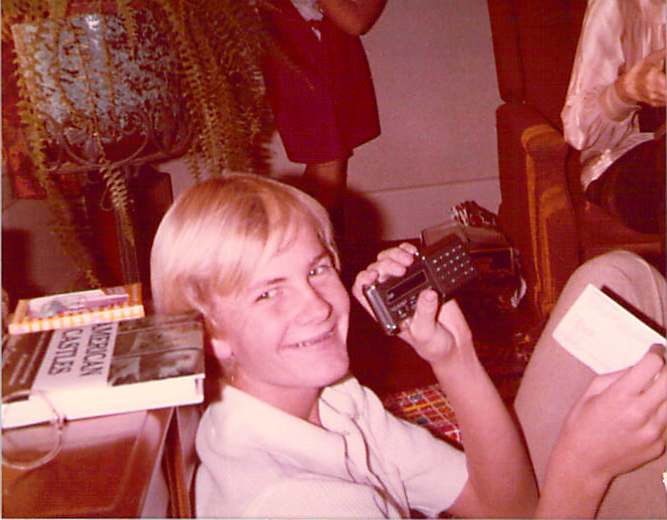
By the wrong measures, my brother Paul was a spectacular failure. On the day he died, he was poor and prematurely losing his teeth. He had a hefty paunch, though he rode a bicycle for daily transportation. His personality was so raw at times that some people couldn’t stand to be around him. Despite this, Paul thought of himself as a motivational speaker, much like the Greg Kinnear character in Little Miss Sunshine only without the endearing wife and family.
Today, he would have a diagnosis on the autism spectrum. He spoke loudly, sometimes shouting for emphasis. He was opinionated and got angry if you didn’t agree. He imposed his will and strange pastimes on others. At our last Thanksgiving together, he backed our entire family into a corner for a strained serenade of a Miguel Bosé song in Spanish. We didn’t know the language or the music and participated for fear of the consequences. At times his discomfiture was epic.
To make money, he was a bellman during the days and worked sleepover jobs in home healthcare. He had a room in a friend’s house. It was small and he was rarely there. When we cleaned it out, the room was a jamble of memorabilia, volumes of paper, and sheets that hadn’t been washed since college. His bachelorhood had gone to seed.
Paul rode his bike at least twenty miles a day. He made a loop between the hotel and a client’s home, changing from his uniform into sweats and back again. He carried a satchel everywhere and had a peculiar gait that caused his six-foot-four frame to bob up and down.
You would have recognized him as a teenager. He was tall and lanky, an accomplished runner and cyclist who rarely managed to slow down or relax. He rode El Tour de Tucson, the competitive bike race, sixteen times. He attended every University of Arizona Duel in the Desert football game for twenty-six years.
He struggled to mature as he grew older. Emotionally, he was a volatile mix of unrequited love and nervous tension.
Paul was college-educated, and when he wasn’t riding his bike or working day and night jobs, he was writing obsessively, organizing weekly time management workshops, and volunteering in his community. He was appreciated among his friends, co-workers, and the people he helped. A month before he died, he took a Thanksgiving basket to a family in need. When his bank account was reconciled, we discovered he had less than $600 and had just spent $150 on the gift.
Paul’s motivational message was divine in its simplicity. What if we all agreed to treat each other better, to keep promises, and to be generous? He spent all of his enormous mental and physical energy trying to convince people that his plan would work. Among his closest friends, he had believers whose lives he managed to touch and change. Paul was a Big Brother to a young man who turned out well. Most of his friendships were lifelong. He kept even modest acquaintances afloat with an impenetrable hope for humanity.
But as a communicator he was pretty awful and his lack of social grace kept him from being accepted among equally high-minded peers. He acquired a graduate degree in counseling through sheer perseverance. After ten years, I suspect the school awarded it just to get rid of him. If anything, Paul was determined.
The reams of paper in his room and the files stored on ancient floppy disks were an obsessive chronicle of Paul’s philosophy. He wrote manuals on time management, printed up postcards that described his principles, and devised sample contracts that were meant to help men and women negotiate their relationships better. None of them were very good writing, technically, and the schemes he created were too formal for most human relationships. To some, Paul’s work looked like an academic and social train wreck. And, it was a lifeline to others.
Every year Paul made a card for Martin Luther King Day. It was a tradition he created and upheld since the holiday began tumultuously in Arizona in 1983. The card invited you to “Write Down Your Dream,” and Paul provided very simple instructions.
“Write down your dream,” he said. “Something for a primary purpose beyond yourself that you would like to do, contribute towards, or see happen in your lifetime or beyond.” Look for something that truly excites you. Commit to it daily, if possible, but at the very least once a year. Find some way to measure yourself and stick to it. Do it with unconditional love. It’s easy, he cajoled. The first step is just to write it down. Then, he made space on the card to fill it in and provided an address to mail it back.
In the late 80s, Paul went to MLK marches in Tucson and Phoenix. He handed the cards out and invited people to join in the tradition. Though I never accompanied him, I can see him in my mind’s eye. A tall, rambling, white guy circling among the crowd trying to look like he belonged.
Ideologically, he was among friends. Paul’s thinking was deeply influenced by the American civil rights movement. His favorite song was “Sunday Bloody Sunday.” He was infuriated when then-Governor Mecham rescinded the MLK holiday, and later angry with our father for defending him in court.
Paul spoke Spanish fluently and was embraced by friends in Arizona and Mexico. He felt far more at home in border culture where his unusual behavior was strange for a different reason. I gather he came across as charming to some. He was forever singing in Spanish and trying to engage through Mexican popular culture. He was in love only once, I think, with a beautiful Latina who was delicate and gracious in her longtime friendship with him.
Paul wanted nothing more than to be the Tony Robbins of his dusty Tucson outpost with an aim to pass on his simple assertion that we should care for each other. He handed out the greeting cards with persistence. Over the years he did meet like-minded people who filled in their dreams and sent them back. In an era before Facebook, Paul was the keeper of those hopeful messages. He yearned for and would have prospered in the online environment we have today.
Paul was killed by a drunk driver while riding his bike home late one night in December 2006. The driver was a young woman who let her fate go careening far beyond her own control, this time fatally into my brother. Her lack of remorse made headlines at the time. I remember thinking that Paul would have immediately begun the hard work of forgiving her. She was one of his flock, in a way, someone he would have wanted to reach. Since his death, I understand more about Paul’s motivations.
His failures have also been instructive. Paul had a great message but a painfully awkward delivery. His strong desire to help others would have been better turned inward at times. Paul was a fiercely protective older brother. Yet in my last email, I pleaded with him to consider why he treated our parents with such disrespect.
Until he died, my deepest fears were rooted in his failures. We are more alike than was comfortable to admit. It was difficult to live with the spectre that his life could be mine. His behavior was a boundary fence for my own sanity. I was ok as long as I wasn’t acting like him.
When I take full account of his life, it is much easier to accept those characteristics we share. Personally, Paul’s most lasting impact on me has been his approach to sport. He chose to burn through his mental energy rather than be medicated. The bike race every year gave him a goal and made the necessity of his daily commute more meaningful. Now, I cultivate in myself the physical determination that was extra-strength in him.
The year after his death, our older brother took Paul’s place in El Tour de Tucson. The event is an annual gathering for our family, a chance to remember Paul’s life and cheer on the team that has formed around him. At the roadside pit stops, we hold up signs that say KEEP GOING and end up rallying for everyone who passes. Turns out Paul invented two traditions in his lifetime.
Working on my own writing, I’ve come to view his effort as a first draft. There was real accomplishment in his work. He was ritualistic in taking notes with a high word count just waiting for the right editor. He tried out his stories on people incessantly. He was also learning to cope with himself in times of pain, doubt, and worry. Paul may have been on his way to something good. At only 46, he needed his lifetime to finesse it.
Peering out the window from my New Zealand writing retreat, I imagined going on a walk together to afford the patience and attention he desired and deserved. The infinite calm of the rolling Wairarapa farmland might have inspired a tone and modulation in his voice. The two horses down the road might have revealed a different trail toward tenderness. Cautiously, I might have taught him how to engage without feeling threatened or needing to be right. I sometimes struggled to listen to him. Now I’m curious what he might have said.
His death prevents that future, except through his memory. I see him in people all over the world and now hold a brotherly love for the socially awkward. He often advises me on those treks through nature. He was right about making space for the differences among us and being clear about relationships.
The distance between Paul and his own craft may have been more than just time. He had hurdles to overcome, as we all do. But his clearest advice still serves today. If you have a dream, that first tender step is to write it down.